Luxembourg City is a capital built on cliffs. Its old fortress town perches above deep green valleys, while across a soaring red bridge the glass towers of Kirchberg house European institutions and bold modern architecture. Two days is just right to explore both sides of this small but surprisingly layered city.
Before you go: transport is free
Since 2020, Luxembourg has offered free public transport nationwide on buses, trams and trains in second class. You simply board without a ticket. This makes the city wonderfully easy to explore, and it also makes day trips across the country very simple. Check mobiliteit.lu for routes and timetables.
The city is also built on several levels, and public lifts help you move between them. The Pfaffenthal panoramic lift links the upper town with the valley below, and a funicular connects the Pfaffenthal-Kirchberg station with the Kirchberg plateau.
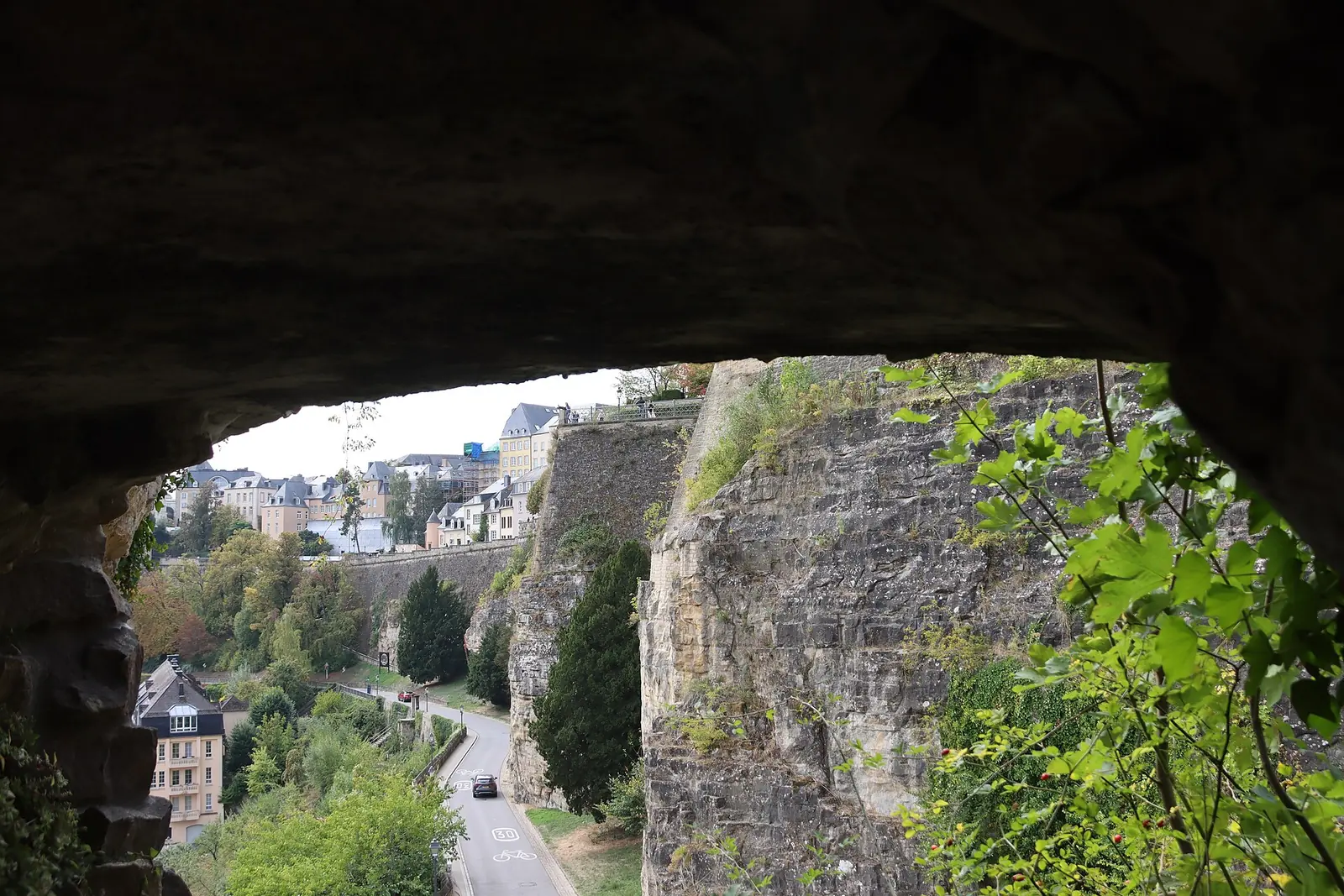
Day 1: the Old Town, the casemates and the Grund
Morning: the upper town
Begin at Place Guillaume II, known locally as the "Knuedler", and walk to the Grand Ducal Palace, the official residence of the Grand Duke in the city. Nearby, the Notre-Dame Cathedral is a fine mix of late Gothic and Renaissance styles.
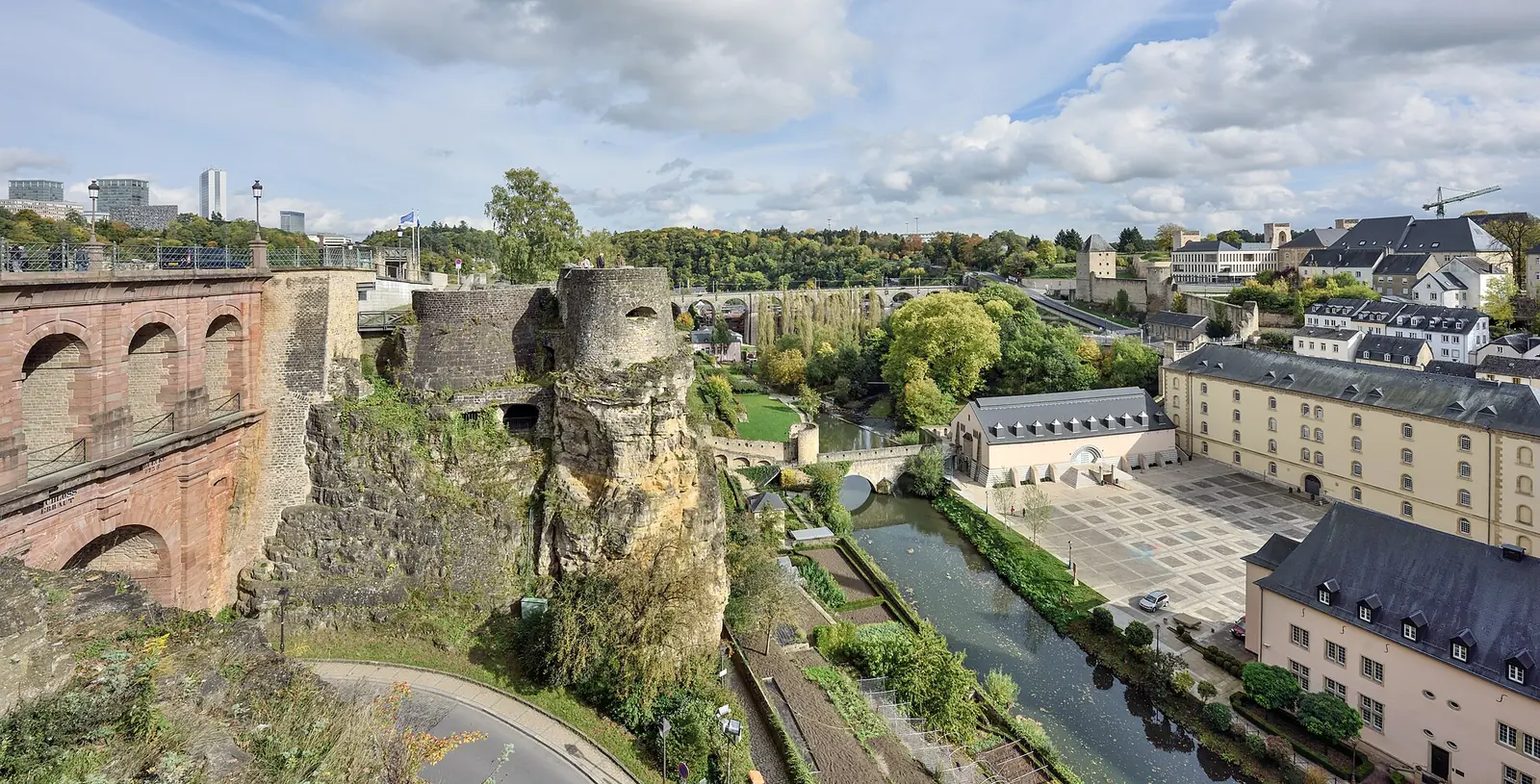
The Old Town and its fortifications are a UNESCO World Heritage Site, a legacy of the centuries when Luxembourg was one of Europe's most powerful fortresses, nicknamed the "Gibraltar of the North".
Late morning: the Chemin de la Corniche
Walk along the Chemin de la Corniche, often described as "the most beautiful balcony in Europe". The path follows the old ramparts and looks down over the Alzette valley and the Grund district. Bring your camera.
Midday: the Bock and its casemates
At the end of the Corniche is the Bock promontory, where the city's history began with a castle in the tenth century. Beneath it lie the Bock casemates, a network of underground galleries carved into the rock to defend the fortress. Visits are organised as guided tours through the Luxembourg City Tourist Office, so check slots and book on luxembourg-city.com before you go.
Afternoon and evening: the Grund
Descend into the Grund, the picturesque quarter on the banks of the Alzette. Its stone houses, footbridges and gardens feel like a village tucked inside the capital. The Neumünster Abbey, now a cultural centre, hosts exhibitions and concerts and has a pleasant terrace.
In the evening, the Grund's riverside pubs and restaurants are a cosy place to end the day.
Day 2: Kirchberg and modern Luxembourg
Morning: across the Red Bridge
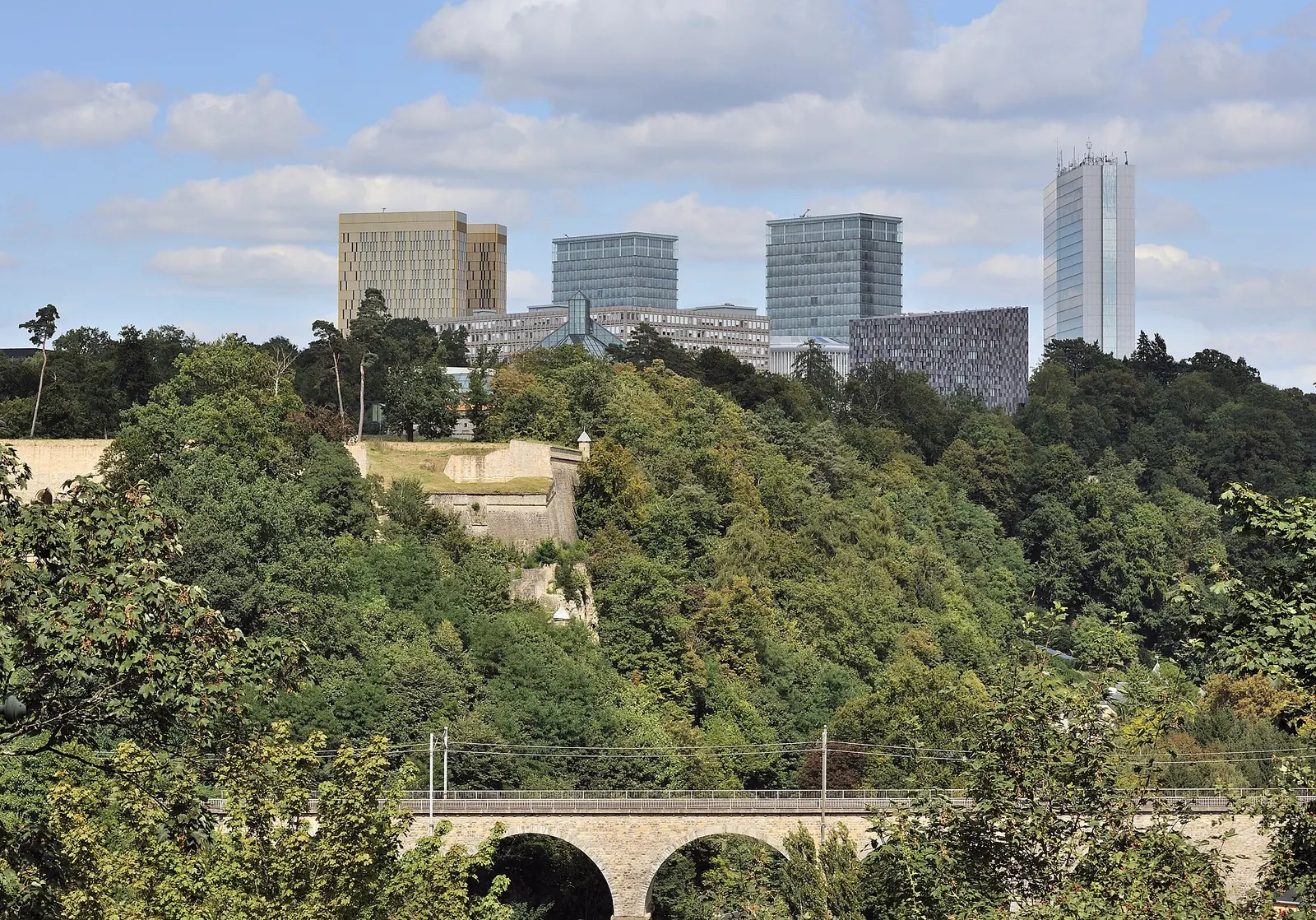
Cross the Grand Duchess Charlotte Bridge, better known as the Red Bridge, or take the tram to the Kirchberg plateau. This is the city's European and business district, home to several EU institutions, including the Court of Justice of the European Union.
Late morning: Mudam and Fort Thüngen
Kirchberg's cultural highlight is Mudam, the Grand Duke Jean Museum of Modern Art, designed by architect I. M. Pei. Its light-filled galleries sit right next to Fort Thüngen, an eighteenth-century fortification whose three towers, the "Three Acorns", now house the Musée Dräi Eechelen, dedicated to the history of the fortress and the nation.
Afternoon: the Philharmonie and the parks
Admire the white columns of the Philharmonie Luxembourg, one of Europe's striking concert halls. If you can catch a performance, it is well worth it; programmes are published on its official website. Kirchberg's parks and wide avenues make a relaxing contrast with the dense Old Town.
Evening: Clausen
Head back down into the valley to Clausen, a neighbourhood built around a former brewery, now a lively spot for bars and restaurants on weekend evenings.
What to eat and drink
- Judd mat Gaardebounen: smoked pork collar with broad beans, the national dish.
- Bouneschlupp: a hearty green bean soup.
- Gromperekichelcher: crispy potato fritters, a favourite at markets and fairs.
- Kachkéis: a soft cooked cheese, spread on bread.
- Moselle wines: Luxembourg's wine region produces crisp white wines and excellent Crémant de Luxembourg.
Where to stay
The Ville-Haute (upper town) is ideal for first-timers who want to walk everywhere. The Grund and Clausen suit those looking for character and nightlife. Kirchberg is practical and modern, with good tram links. The area near the Gare is convenient for train arrivals.
Accommodation in Luxembourg is in high demand, especially during the week. If you would rather have a full apartment than a hotel room, book a Hexuvium apartment in Luxembourg, managed by a concierge company founded in nearby Brussels in 2015.
Practical tips
- Languages: Luxembourgish, French and German are official languages, and English is widely spoken.
- Weekends: some business-district restaurants close at weekends, while the Old Town stays busy.
- Day trips: thanks to free transport, Vianden, the Mullerthal region and the Moselle wine villages are easy to reach.
Small in size but big on views, Luxembourg City is the kind of place that makes you want to walk every rampart twice.