Marrakech is a feast for the senses: spice-scented souks, the call to prayer drifting over pink-ochre walls, storytellers and smoke from food stalls in the great square. It can also feel intense on a first visit. With a few pointers on where to go, where to stay and how to behave, the city reveals its warmth and its extraordinary beauty.
Understanding the city
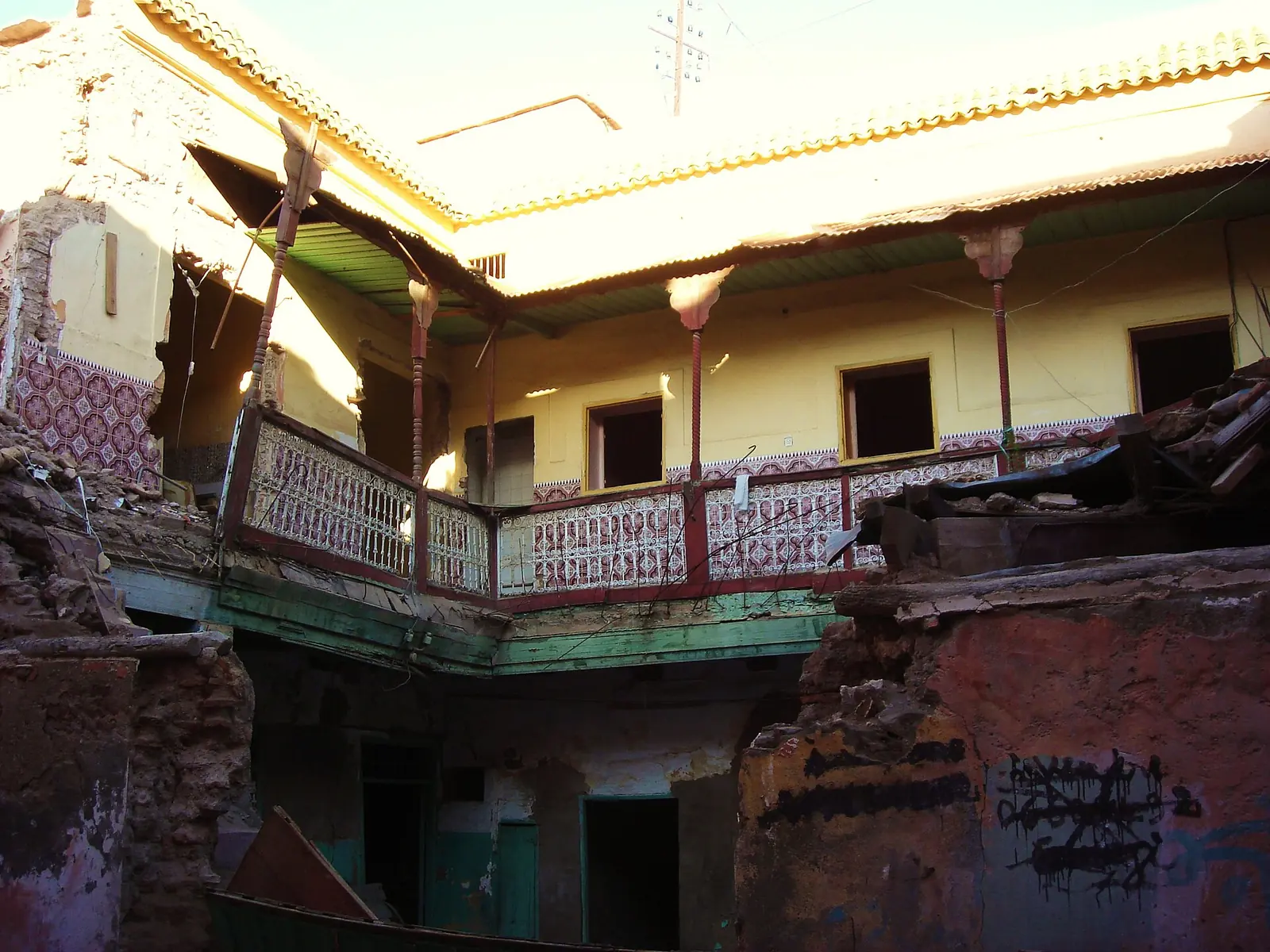
Marrakech has two very different faces. The medina, the walled old city, is a UNESCO World Heritage Site and a dense labyrinth of lanes, souks, palaces and riads. Outside the walls, the Ville Nouvelle, notably Gueliz and Hivernage, was laid out in the twentieth century with wide avenues, cafés, galleries and modern hotels.
Most first-timers spend their days in the medina and slip out to Gueliz for the Majorelle Garden and a change of pace.
The medina: what to see
Jemaa el-Fna
The beating heart of the medina is Jemaa el-Fna, the great square whose living tradition of storytellers, musicians and performers is recognised by UNESCO as intangible cultural heritage. By day, it is fairly calm, with orange-juice stalls and snake charmers. At dusk, it transforms as food stalls set up and the crowds arrive. Watching it from a rooftop café terrace is a classic first-evening experience.
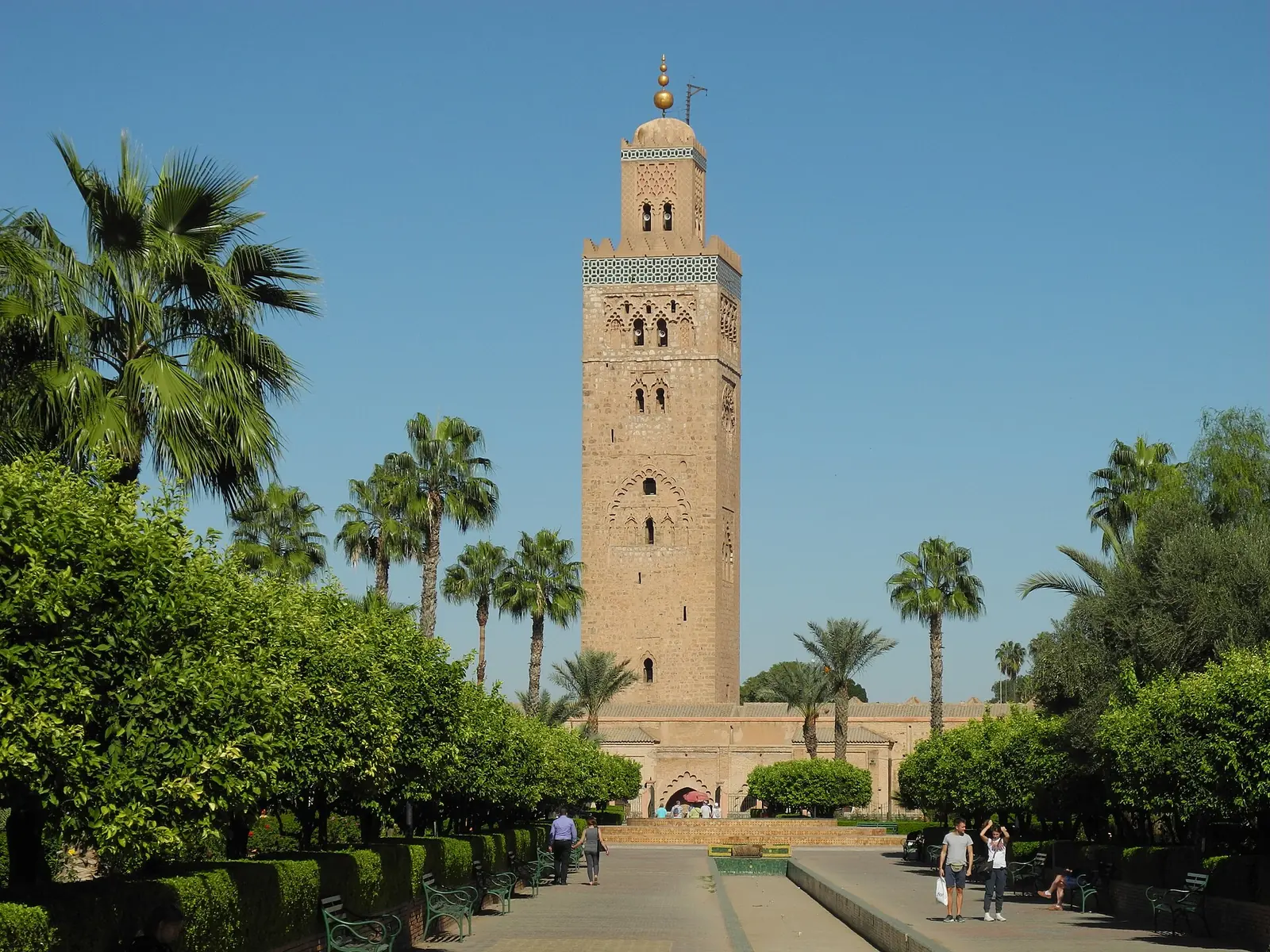
The Koutoubia Mosque
Its minaret, visible from much of the city, is Marrakech's most famous landmark. As in most of Morocco, non-Muslims cannot enter the mosque, but the surrounding gardens are pleasant for a stroll.
Palaces, tombs and madrasas
- Bahia Palace: a nineteenth-century palace of courtyards, painted ceilings and intricate tilework.
- El Badi Palace: the impressive ruins of a sixteenth-century palace, with storks nesting on its walls.
- Saadian Tombs: the richly decorated burial place of the Saadian dynasty.
- Ben Youssef Madrasa: a former Koranic school with a magnificent courtyard of carved cedar, stucco and zellige tilework.
- Le Jardin Secret: a restored riad garden in the heart of the medina, a calm refuge from the bustle.
The souks
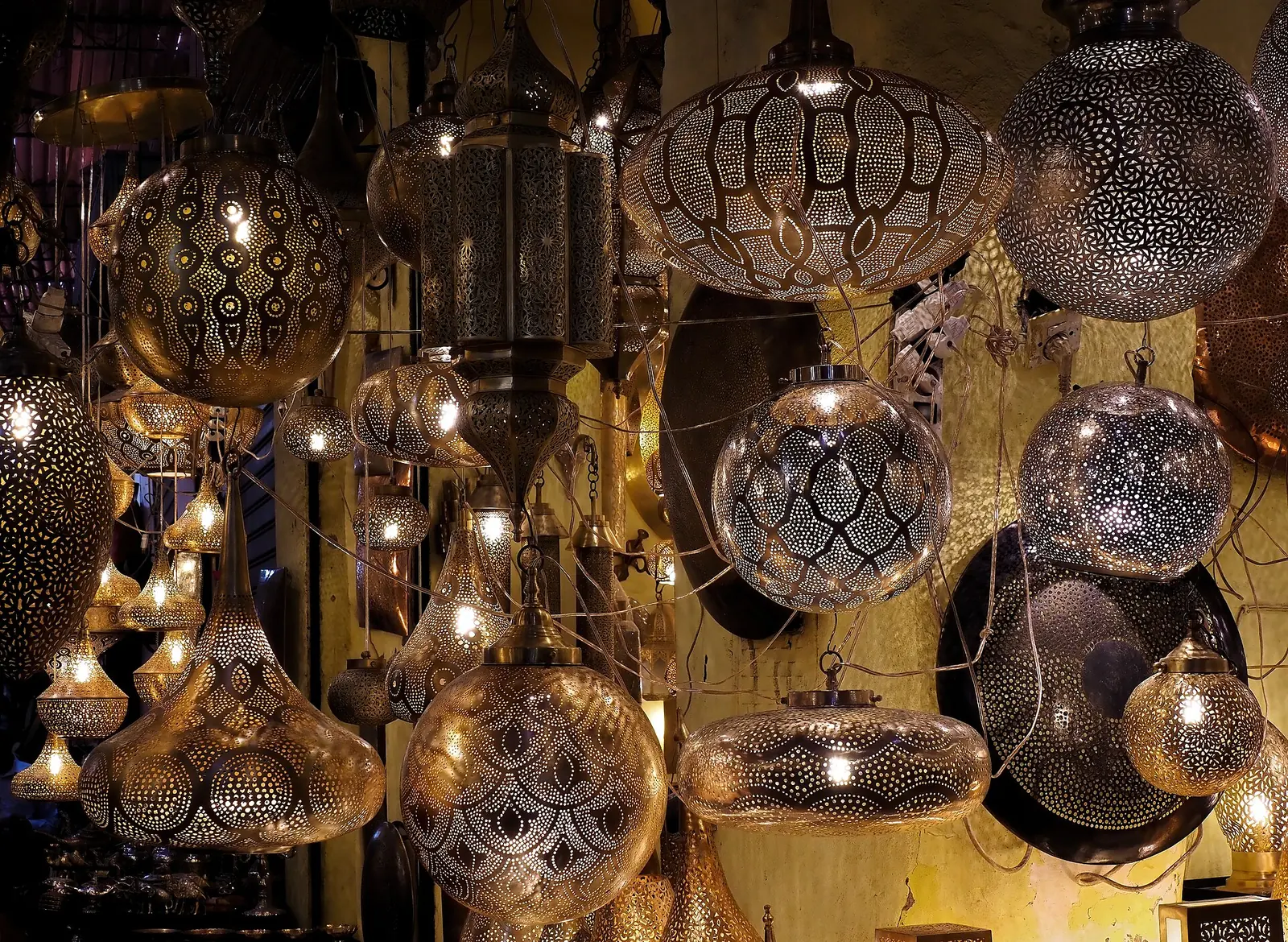
North of Jemaa el-Fna lie the souks, a maze of covered lanes organised loosely by craft: leather, metalwork, textiles, spices, lanterns. Getting lost is part of the experience, but a map app with offline access helps you find your way back.
Beyond the walls: the Majorelle Garden
In Gueliz, the Jardin Majorelle, created by the painter Jacques Majorelle and later owned by Yves Saint Laurent and Pierre Bergé, is famous for its intense cobalt blue and its exotic plants. Next door, the Musée Yves Saint Laurent Marrakech celebrates the designer's work. The garden is very popular: buy your tickets on its official website, jardinmajorelle.com, and avoid unofficial sellers.
Riad or apartment?
Choosing your accommodation is one of the most important decisions for a Marrakech trip.
Staying in a riad
A riad is a traditional house built around an inner courtyard or garden, often with a rooftop terrace. Many have been converted into guesthouses.
- Pros: immersive atmosphere, peace and quiet inside thick walls, breakfast and staff on hand, and help with taxis, guides and directions.
- Cons: some are hard to find in the medina's alleys, rooms around a courtyard can feel less private, and narrow lanes may not be accessible by car, so you might need to walk the last stretch with your luggage.
Staying in an apartment
Apartments are more common in Gueliz and Hivernage, and in residential areas outside the medina.
- Pros: more space and privacy, a kitchen, a good fit for families or longer stays, easier car access and a more local, everyday feel.
- Cons: less of the traditional riad atmosphere, and you will usually take a taxi into the medina.
A sensible compromise for a first visit is to split your stay: a few nights in a riad for the experience, then an apartment for more space and calm.
Practical etiquette
- Dress modestly: covering shoulders and knees is respectful, particularly in the medina and for women.
- Ask before photographing people: performers in Jemaa el-Fna will often expect a tip for photos.
- Bargain with a smile: haggling is normal in the souks. Decide what an item is worth to you and keep it good-humoured.
- Use your right hand to eat, give and receive.
- Decline unofficial guides politely but firmly: a simple "no, thank you" is enough. If someone tells you a street is closed, check your map.
- Taxis: agree on the fare before departure or ask the driver to use the meter.
- Ramadan: if you visit during Ramadan, avoid eating, drinking or smoking conspicuously in public during the day.
- Alcohol is available in licensed hotels, restaurants and bars, but not everywhere.
What to eat
- Tagine: slow-cooked stews of meat, vegetables, prunes or preserved lemon.
- Tanjia: a Marrakech speciality of meat slow-cooked in a clay urn.
- Couscous: traditionally eaten on Fridays.
- Harira: a hearty soup of tomatoes, lentils and chickpeas.
- Mint tea: sweet, poured from a height and offered as a sign of hospitality.
Where to stay
For atmosphere, stay inside the medina, ideally within walking distance of Jemaa el-Fna. For comfort and space, Gueliz and Hivernage are excellent bases.
If you prefer an apartment, you can also look at Hexuvium's homes in Marrakech, handled by a short-term rental concierge founded in Brussels in 2015 that also operates in Rabat.
Final tips
- Carry small change for tips, taxis and street food.
- Stay hydrated: summers can be extremely hot, so spring and autumn are the most comfortable seasons.
- Slow down: Marrakech rewards those who take time for mint tea and conversation.
Approach Marrakech with curiosity and patience, and it will repay you with some of the most vivid memories of your travels.